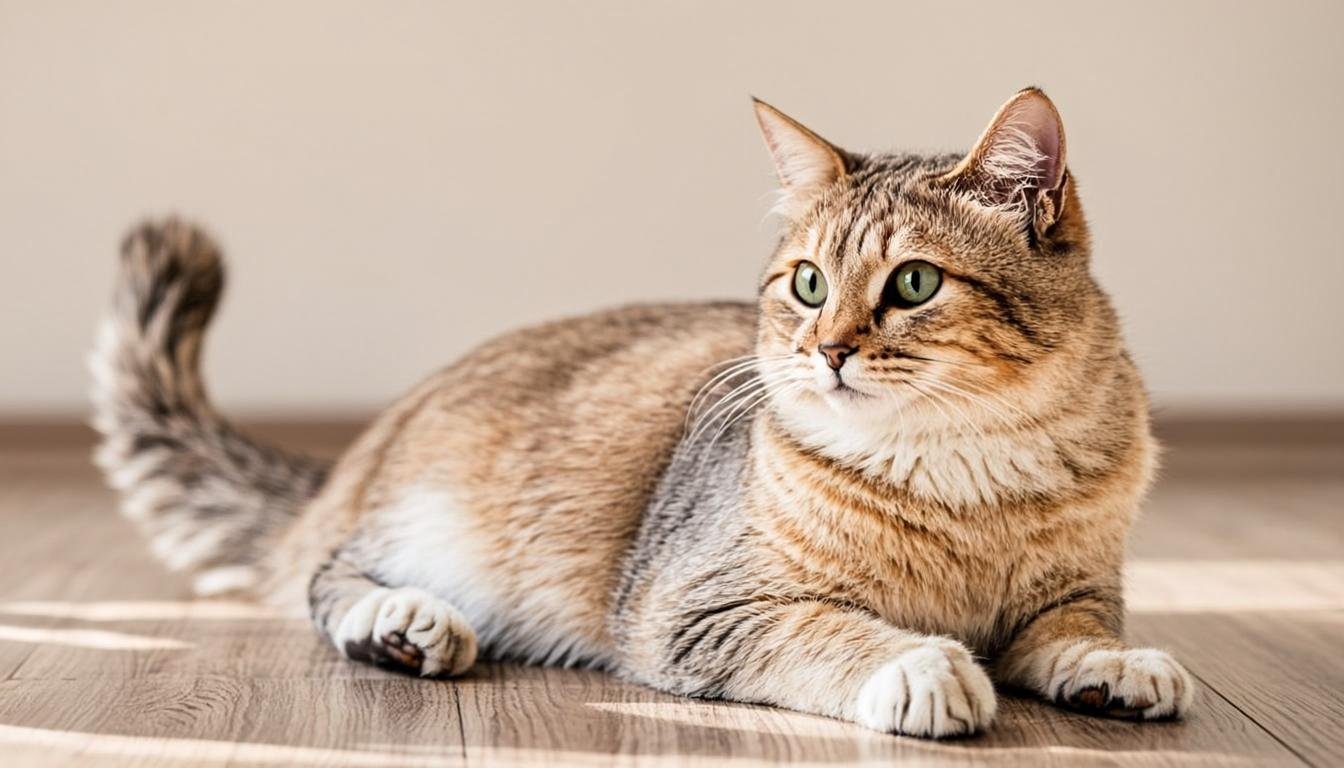
A cat's body language is a fascinating universe, often unknown to humans. By carefully observing its tail and ears, you can decipher its emotions, needs, and health status, thus strengthening your bond with your feline companion. These non-verbal signals are essential to better understand your cat and meet its expectations.
The signs of the tail: an emotional barometer
The tail is one of the most visible indicators of your cat's mood. By learning to interpret its movements, you will know if it is happy, stressed, or in danger.
Common positions and their meanings
- Tail raised and curved in a question mark: Your cat is confident, happy, and sociable. This is the sign of a relaxed cat, happy to see you.
- Tail lowered or between the legs: Indicates fear, submission, or illness. A cat in this state needs calm and security.
- Tail whipping rapidly: Excitement or irritation. If the tail is whipping violently, your cat is about to attack or defend itself.
- Tail puffed up like a bottle: Sign of fear or aggression. Your cat feels threatened and is trying to intimidate.
Subtle movements to watch for
- Slight tail twitch: Your cat is focused, perhaps on a real or imaginary prey.
- Tail wrapped around your arm: A sign of affection and trust. This is its way of considering you a member of its family.
The ears: mirrors of its feelings
Your cat's ears are also a valuable source of information about its emotional state. Their position and movement reveal a lot about its mood.
Ear positions and their interpretations
- Ears pricked forward: Curiosity and interest. Your cat is attentive to its environment.
- Ears flattened against the head: Fear, anger, or stress. A cat in this position can be aggressive.
- Ears slightly back: Relaxation and trust. Your cat is comfortable in its environment.
- Ears turned to the sides: Neutral or slightly annoyed. It is monitoring its environment without feeling threatened.
Combined signals with other body parts
The ears should not be interpreted in isolation. Combined with the tail or the body, they give a more complete picture of your cat's state. For example, flattened ears and a puffed-up tail signal imminent danger.
Combining signals for an accurate interpretation
To properly understand your cat, it is crucial to observe its entire body language, not just the tail or ears. The combination of these signals will allow you to decipher its emotions with more precision.
Examples of revealing combinations
- Tail raised and ears forward: A happy and curious cat.
- Tail lowered and ears flattened: A very fearful or sick cat.
- Tail whipping and ears back: An annoyed cat or about to attack.
The importance of context
Context plays a major role. A cat can have its ears back simply because it is in a deep sleep. Always observe the overall situation before drawing conclusions.
Practical tips for better communication
To strengthen your bond with your cat, follow these simple tips based on its body language.
Respecting its signals
- Never force your cat to interact if it shows signs of fear or aggression.
- Give it space when its tail is lowered or its ears are flattened.
Building trust
- Use a calm and soft tone when speaking to your cat.
- Reward its positive behaviors, such as a raised tail or ears forward.
FAQ
Q1: My cat wags its tail while sleeping, is this normal?
Yes, small tail movements during sleep are usually signs of dreaming. This is a normal and harmless behavior.
Q2: What should I do if my cat always has flattened ears?
If your cat's ears are constantly flattened, it may indicate pain or chronic stress. Consult a veterinarian to rule out any health problems.
Q3: Is a tail wrapped around my arm a sign of affection?
Absolutely! It's a gesture of affection and trust. Your cat considers you a member of its family.
By carefully observing your cat's body language, you create a stronger and more harmonious bond. For optimal comfort, discover our GatoPouch solution designed for the well-being of your feline companion.